The Sikh Empire: Ranjit Singh and the Diamond as a Symbol of Sovereignty
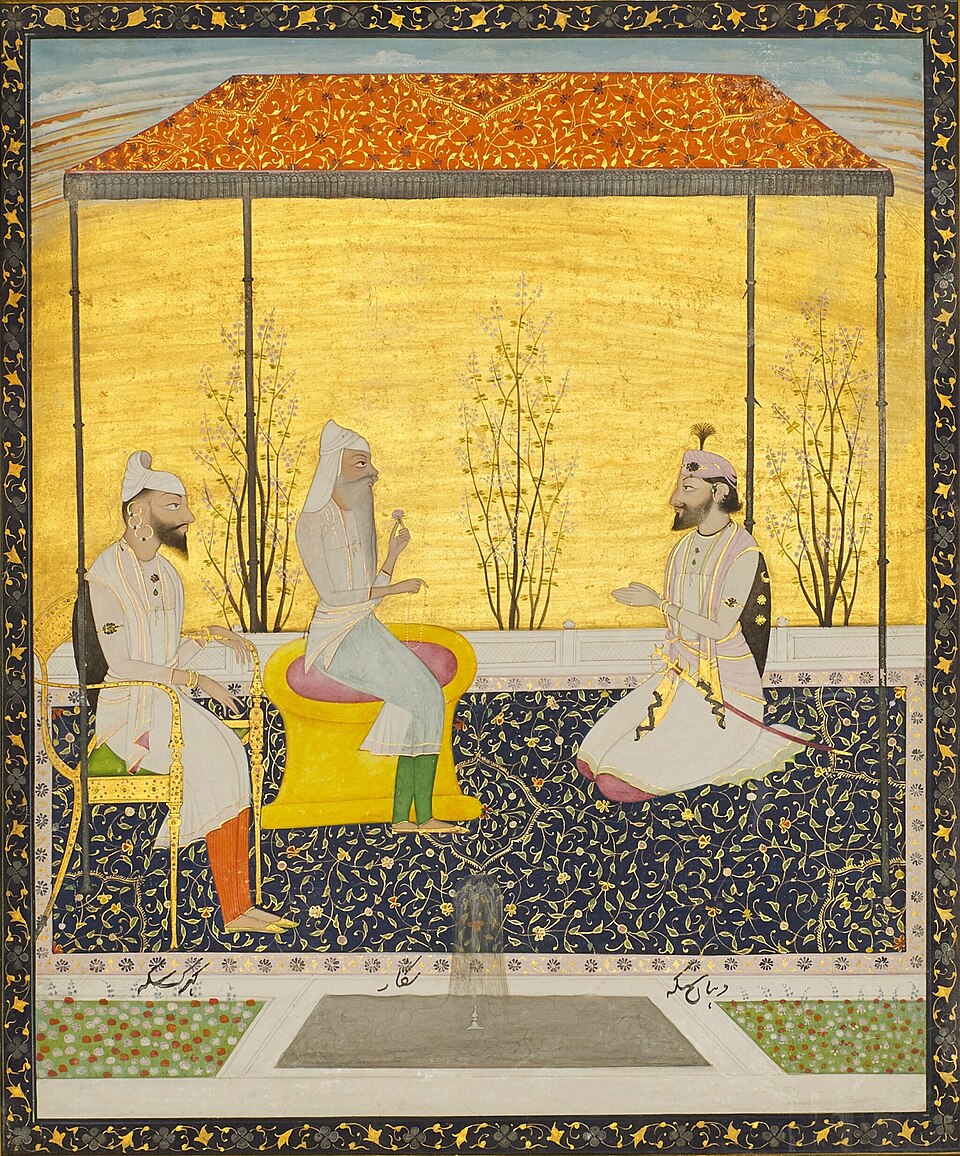
In 1813, after seventy years in Afghanistan, the Kohinoor came home to Punjab — and it stayed there for thirty-six years, longer than it had stayed anywhere since the Mughal throne. Its owner was Maharaja Ranjit Singh, the one-eyed soldier who had united the Punjab into a single empire and kept the British at bay for forty years. For Ranjit Singh, the diamond was not a jewel to be locked away. He wore it on his arm, showed it to visitors, and made it the visible symbol of his sovereignty. When he died, he left it not to his son, and not to the British, but to a temple.
In short
The Kohinoor reached the Sikh Empire in 1813, when Shah Shuja Durrani — the deposed Afghan ruler, rescued from imprisonment in Kashmir by Ranjit Singh's general — handed it over at Mubarak Haveli in Lahore on 1 June 1813. Ranjit Singh wore the diamond in an armband and made it the symbol of Sikh sovereignty. It stayed with the Sikhs until 1849, when the British annexed the Punjab and took it under the Treaty of Lahore. Ranjit Singh had willed the stone to the Jagannath temple at Puri, but the will was never carried out.
Afghanistan: seventy years of the Durranis
After Nadir Shah's assassination in 1747, the diamond passed to Ahmad Shah Durrani, his most senior Afghan general, who founded the Durrani Empire — the state that became Afghanistan. The stone stayed with the Durrani rulers for about seventy years, through the reigns of Ahmad Shah and his son Timur Shah. It was a period of constant war: Timur Shah's twenty-four sons fought each other for the succession after his death in 1793, and the empire broke apart. One of the claimants, Shah Shuja Durrani, was driven from Kabul, imprisoned in Kashmir by the governor Ata Muhammad Khan, and left to rot while his family fled to Lahore. It was his wife, Wafa Begum, who struck the deal that brought the diamond to Punjab.
Wafa Begum promised Ranjit Singh the Kohinoor if he would rescue her husband. Ranjit Singh, who had built his empire by exactly this kind of bargain, agreed. He sent his trusted general Diwan Mokham Chand with an army to Kashmir, and in 1813 Shah Shuja was freed. But the diamond did not change hands at once. Shah Shuja and Wafa Begum stalled, at one point claiming the stone had been pledged to a moneylender in Kandahar. Ranjit Singh, who had spent men and money on the rescue, lost patience: he restricted the family's movements in Lahore and put pressure on them until, on 1 June 1813, Shah Shuja presented the Kohinoor to the Maharaja at Mubarak Haveli in Lahore. Shah Shuja's own memoirs tell a darker version of the story — that Ranjit Singh extorted the diamond from him, having his son tortured in front of him — and this site reports both accounts, because the truth is disputed and the sources disagree.
The Lion of Punjab
Maharaja Ranjit Singh (1780–1839) was the founder of the Sikh Empire and one of the most remarkable rulers in Indian history. He had lost the sight of one eye to smallpox as a child, and he had united the warring Sikh chiefdoms of the Punjab into a single state by the age of twenty. His empire stretched from the Khyber Pass to the Sutlej River, and his army — trained by European officers, with modern artillery — was the strongest in India. The British, who were expanding across the subcontinent, signed a treaty with him in 1809 and left him alone for thirty years, because they knew they could not beat him. He was, in the words of one British visitor, "the Lion of Punjab", and he ruled Lahore as a capital of art, learning, and tolerance: his court included Hindus, Muslims, Sikhs, and Europeans, and his administration employed men of all faiths.
Ranjit Singh understood the value of the Kohinoor as a symbol. He did not lock it in a treasury. He wore it in an armband, where visitors could see it, and he showed it to ambassadors and travellers as proof that the Punjab was a sovereign state with a treasure to match any empire's. Distinguished visitors were allowed to see the Maharaja wearing the great jewel on his arm — a deliberate piece of theatre, and a message: this stone, which had belonged to Mughals and Persians and Afghans, now belonged to the Sikhs. The diamond became, in the words of later historians, the symbol of Sikh sovereignty itself.
The will that was never carried out
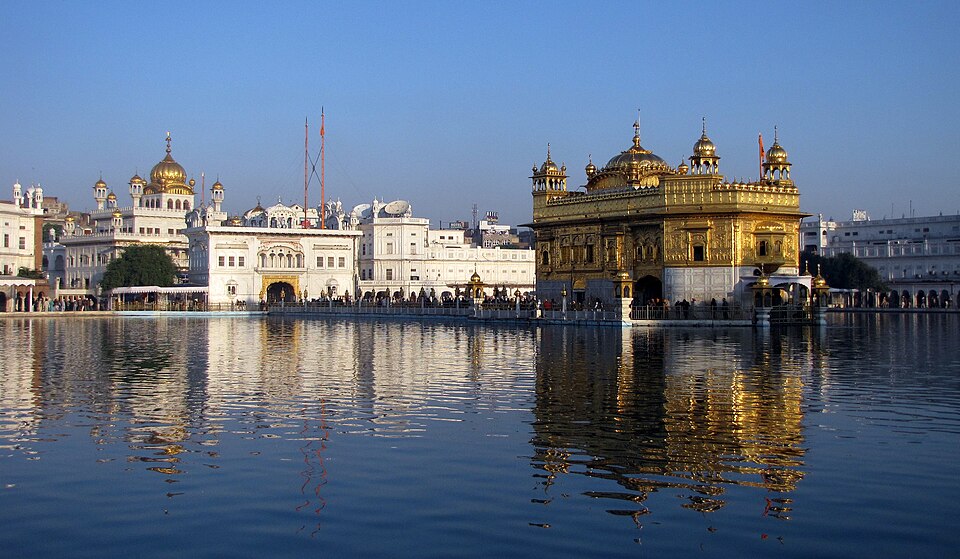
Ranjit Singh died on 27 June 1839, and his death undid everything he had built. In his will, he left the Kohinoor not to his son, and not to the British, and not to his court — but to the Jagannath temple at Puri, one of the holiest shrines in India. It was a religious bequest, and a political one: by giving the diamond to a temple, he was placing it beyond the reach of any ruler. But the will was never carried out. His successors fought each other for the throne — three of his sons and grandsons died violently in the next six years — and the diamond stayed in the Lahore treasury while the empire fell apart. The British watched, waited, and in 1845 went to war. By 1849 the Sikh Empire was gone, and the diamond was on its way to London. The temple at Puri never received its gift, and the bequest is still cited today by those who argue that the stone was never the British Crown's to keep.
Why the Sikh chapter matters
The Sikh chapter matters for two reasons. First, it is the chapter in which the diamond became a national symbol rather than a royal possession — the stone of a people, not just of a king. Second, it is the chapter that shapes the ownership dispute today. Pakistan's claim rests, in part, on the argument that the diamond was taken from Lahore, the capital of the Sikh Empire — and Lahore is now in Pakistan. India's claim rests on the stone's Indian origin and its long history on the subcontinent. The Sikh community itself has also asked for the diamond's return, arguing that it was the property of the Sikh Empire and should go to its people. All three arguments run through Ranjit Singh's Lahore, and through the thirty-six years when the Kohinoor was worn on a maharaja's arm.
| Date | What happened |
|---|---|
| 1747 | Nadir Shah assassinated; the diamond passes to Ahmad Shah Durrani |
| 1793 | Timur Shah dies; his sons fight for the Durrani succession |
| 1798 | Ranjit Singh succeeds his father as chief of the Sukerchakia misl |
| 1809 | Treaty of Amritsar — the British recognise Ranjit Singh's rule north of the Sutlej |
| 1810 | Shah Shuja imprisoned in Kashmir; Wafa Begum offers the Kohinoor for his rescue |
| 1 Jun 1813 | Shah Shuja presents the Kohinoor to Ranjit Singh at Mubarak Haveli, Lahore |
| 27 Jun 1839 | Ranjit Singh dies; his will leaves the diamond to the Jagannath temple at Puri |
| 1845–1849 | First and Second Anglo-Sikh Wars; the Sikh Empire collapses |
Sources: Indian Express, “How the Koh-i-Noor came home to Punjab — before Britain took it away”; Wikipedia, “Koh-i-Noor” and “Ranjit Singh”; World History Encyclopedia, “Koh-i-Noor”; Scroll.in, “These 13 crucial events capture the sparkling adventures of the Kohinoor.” Checked 29 November 2026.