The Mughal Era: Two Centuries as the Jewel of the Emperors
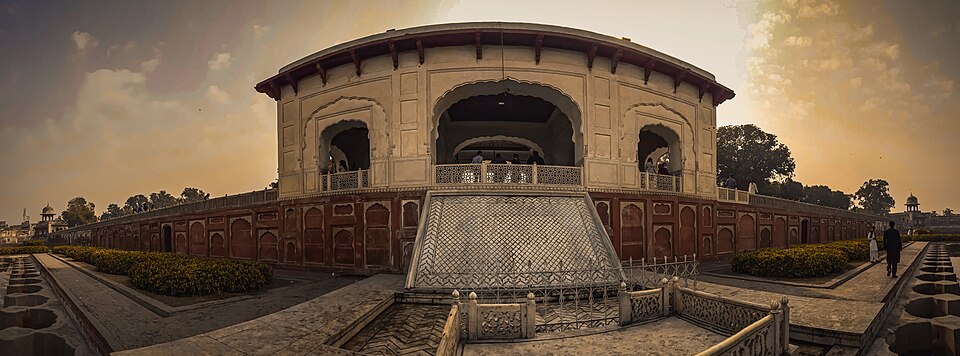
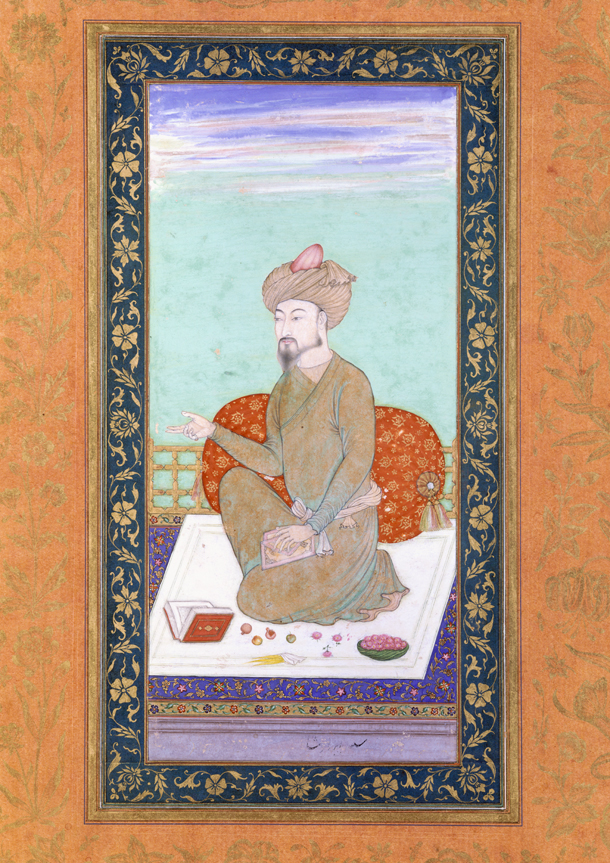
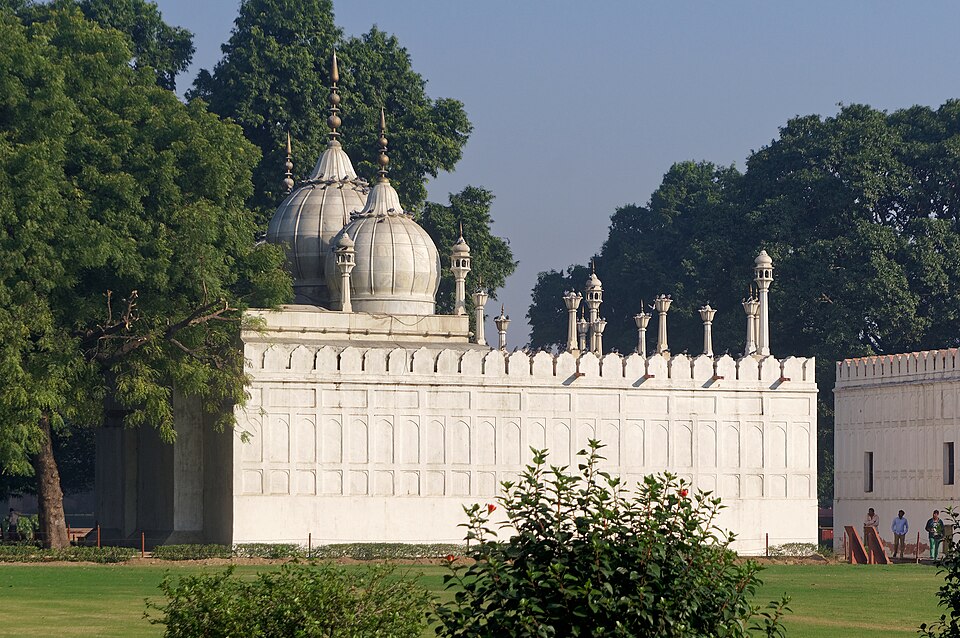
For more than two hundred years, the Kohinoor belonged to the richest dynasty on Earth. It passed from Babur, the founder of the Mughal Empire, to his sons and grandsons, and it ended up set in the most extravagant throne ever built — a peacock of solid gold, studded with emeralds, rubies, and diamonds, made for the emperor who built the Taj Mahal. The Mughal era is the longest chapter in the diamond's life, and it is also the chapter in which the stone became what it is today: not just a jewel, but a symbol of power, to be seized, displayed, and fought over.
In short
The Kohinoor was in Mughal hands from 1526, when Babur first mentions a great diamond in his memoirs, until 1739, when Nadir Shah of Persia sacked Delhi and carried it away. In between, it passed through the hands of Humayun, Akbar, Jahangir, and Shah Jahan. Shah Jahan set it in his Peacock Throne, commissioned in 1628, where it sat in the head of one of the golden peacocks. It stayed with the Mughals for 213 years — longer than with any other owner — and it left with the man who destroyed their empire.
Babur and the first mention
Babur was a descendant of Timur (Tamerlane) on his father's side and of Genghis Khan on his mother's, and in 1526 he invaded India from Central Asia with a small army and a new weapon: gunpowder artillery. At the First Battle of Panipat, on 21 April 1526, he defeated Ibrahim Lodi, the Sultan of Delhi, and founded the Mughal Empire. In his memoirs, the Baburnama — one of the most vivid autobiographies ever written by a ruler — Babur mentions a great diamond. He says it was given to his son Humayun by the Raja of Gwalior after the battle, or that it was taken from the Lodi treasury; the accounts in the memoir and in later histories differ on the detail. Babur valued the diamond, he wrote, at half the daily revenue of the whole world — a piece of royal exaggeration, but a measure of how extraordinary the stone seemed even to an emperor who had seen the treasuries of Central Asia.
Whether "Babur's diamond" was the Kohinoor is the first great question of the stone's history, and it is still debated. The case for it is strong: the stone Babur describes was very large, it came from central India, and it stayed in the Mughal treasury afterwards, passing from father to son. The case against it is that Babur does not call it by its later name, and that other large diamonds were circulating in India at the same time. Most historians — including William Dalrymple and Anita Anand, in their book on the diamond — accept that Babur's stone was the Kohinoor. This site follows that view, but says so plainly: it is likely, not certain.
From Humayun to Akbar to Jahangir
After Babur, the diamond passed to his son Humayun, who lost his empire to the Afghan ruler Sher Shah Suri and spent fifteen years in exile in Persia before winning it back. The stone survived the exile, the wars, and the flight — royal jewels were portable wealth, and a diamond of this size was a treasury in itself, easy to carry and impossible to replace. Under Akbar, Babur's grandson, the Mughal Empire grew into the richest state in the world, and the diamond became part of the imperial regalia: worn, displayed, and shown to ambassadors as proof of the emperor's power. Akbar's son Jahangir, who loved jewels and wrote about them in his own memoirs, inherited the stone and the habit of displaying it. By the early seventeenth century the Kohinoor was not merely a possession of the emperor; it was part of what it meant to be the emperor.
The Mughals understood the political value of a great jewel. A diamond that no one else owned was a claim to uniqueness, and a throne set with such stones was a statement that the emperor's wealth was beyond challenge. European visitors to the Mughal court — the English ambassador Sir Thomas Roe, the French traveller Jean-Baptiste Tavernier — wrote home in astonishment about the jewels they saw. Tavernier, a jewel merchant who visited India several times in the 1600s, described the Mughal treasury in detail, including a great diamond he called the "Great Mogul" — a stone of about 280 carats that most modern gemmologists believe was later recut as the Orlov diamond, now in the Kremlin. Whether Tavernier ever saw the Kohinoor itself is uncertain, and his description of the Great Mogul does not match the Kohinoor's shape or lack of fire. The confusion is a reminder of how hard it is to match old descriptions to physical stones.
The Peacock Throne
The high point of the diamond's Mughal life came under Shah Jahan, the emperor who built the Taj Mahal. In 1628, soon after taking the throne, Shah Jahan commissioned a new throne — the Takht-i-Taus, the Peacock Throne — and it was the most extravagant piece of furniture ever made. It was a platform of solid gold, about two metres long, with a canopy held up by twelve emerald columns, and on top of the canopy stood two golden peacocks with outspread tails of enamel, sapphires, and rubies. The throne was studded with diamonds, emeralds, rubies, and pearls, and the Kohinoor was set in the head of one of the peacocks, where it caught the light above the emperor's head. The throne took seven years to make and cost, by one account, twice as much as the Taj Mahal. It was the centrepiece of the Mughal court, and the Kohinoor was its brightest jewel.
Shah Jahan's reign ended in tragedy. In 1658 his son Aurangzeb deposed him, imprisoned him in Agra Fort, and took the throne for himself. Shah Jahan spent the last eight years of his life in a tower of the fort, looking across the river at the Taj Mahal, the tomb of his wife. Legend says that Aurangzeb had the Kohinoor placed against a window so that his father could see the Taj reflected in the stone — a beautiful story, and almost certainly untrue, but it has been told so often that it has become part of the diamond's mythology. What is true is that the stone stayed in the Mughal treasury under Aurangzeb, and that the empire he inherited was already beginning to fall apart. By the time Aurangzeb died in 1707, the Mughals were in decline, their treasury was emptying, and their throne — and the diamond on it — were prizes waiting to be taken.
Decline and the road to 1739
The thirty years after Aurangzeb's death were a slow collapse. His successors fought each other for the throne, the Marathas rose in the south, and the empire's provinces broke away one by one. The emperor in Delhi, Muhammad Shah, was a pleasure-loving ruler who left government to his courtiers, and the treasury that had once held the wealth of the world was running dry. The Peacock Throne was still there, and the Kohinoor was still in it, but the army that had once protected them was gone. In 1739 a Persian conqueror named Nadir Shah looked at the richest and weakest empire in Asia and decided to take what was left. The diamond's Mughal chapter was about to end in fire and looting, and the stone would not see India again for seventy-four years.
| Emperor | Reign | The diamond in his time |
|---|---|---|
| Babur | 1526–1530 | First written mention, in the Baburnama |
| Humayun | 1530–1556 | Carried through exile in Persia and back |
| Akbar | 1556–1605 | Part of the imperial regalia at the height of Mughal power |
| Jahangir | 1605–1627 | Displayed to ambassadors; described in his memoirs |
| Shah Jahan | 1628–1658 | Set in the Peacock Throne (commissioned 1628) |
| Aurangzeb | 1658–1707 | Kept in the treasury as the empire declined |
| Muhammad Shah | 1719–1748 | Lost the stone to Nadir Shah in the sack of Delhi, 1739 |
Sources: Wikipedia, “Koh-i-Noor” and “Peacock Throne”; World History Encyclopedia, “Koh-i-Noor”; Indian Express, “From Golconda to London, the journey of Kohinoor diamond”; Encyclopaedia Britannica, “Koh-i-noor diamond.” Checked 29 November 2026.