Famous Diamonds Compared: The Cullinan, the Hope, the Darya-i-Noor, and the Orlov
The Kohinoor is famous, but it is not the biggest diamond in the world, and it is not the most valuable. It is famous because of its history. This guide puts the stone beside the other great diamonds — the Cullinan, the Hope, the Darya-i-Noor, the Orlov, and the Regent — and asks what makes each one matter. Some are bigger. Some are more beautiful. Some have better-documented histories. None of them has been fought over as much as the Kohinoor, and none of them has outlived as many empires.
In short
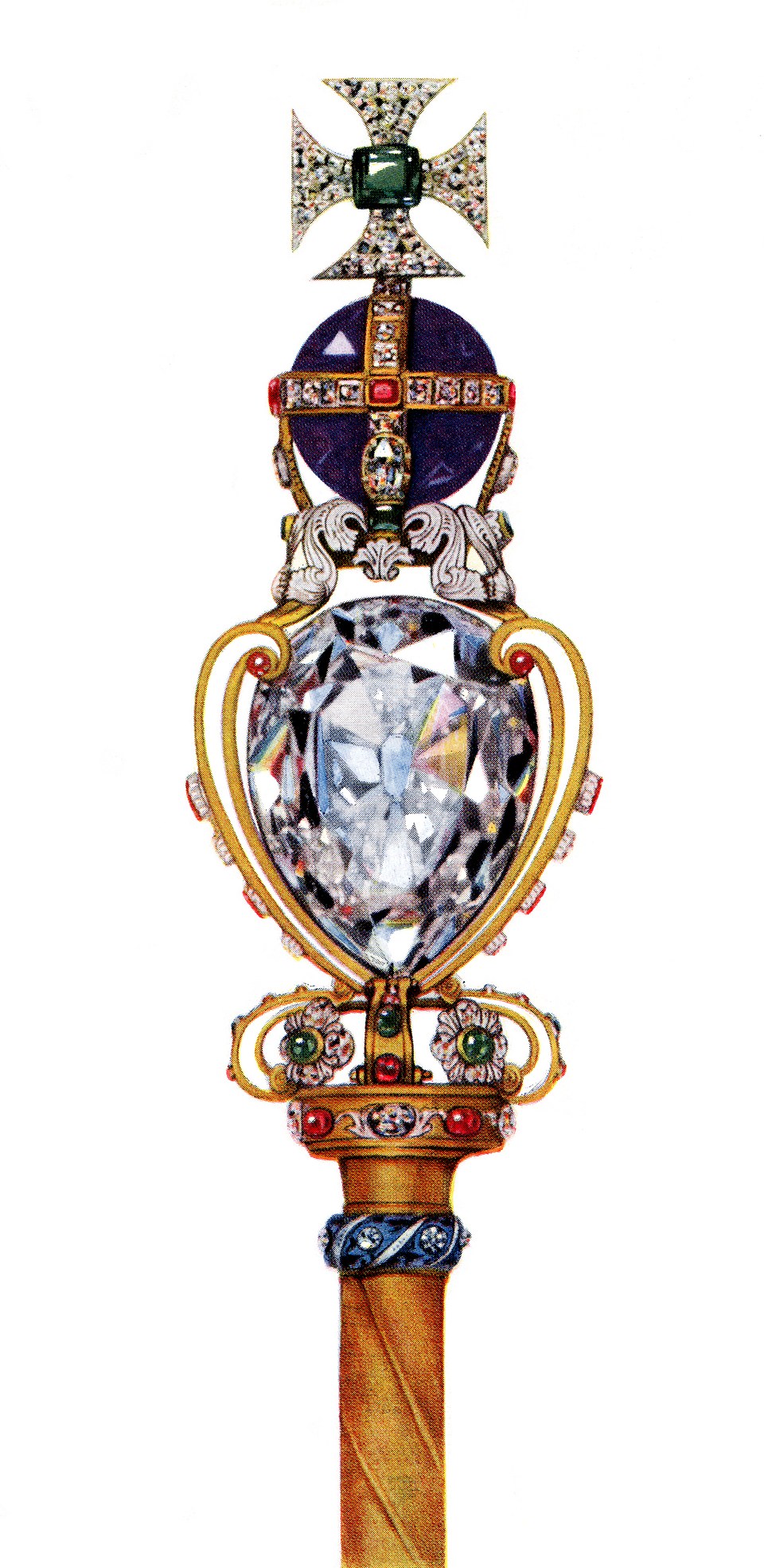
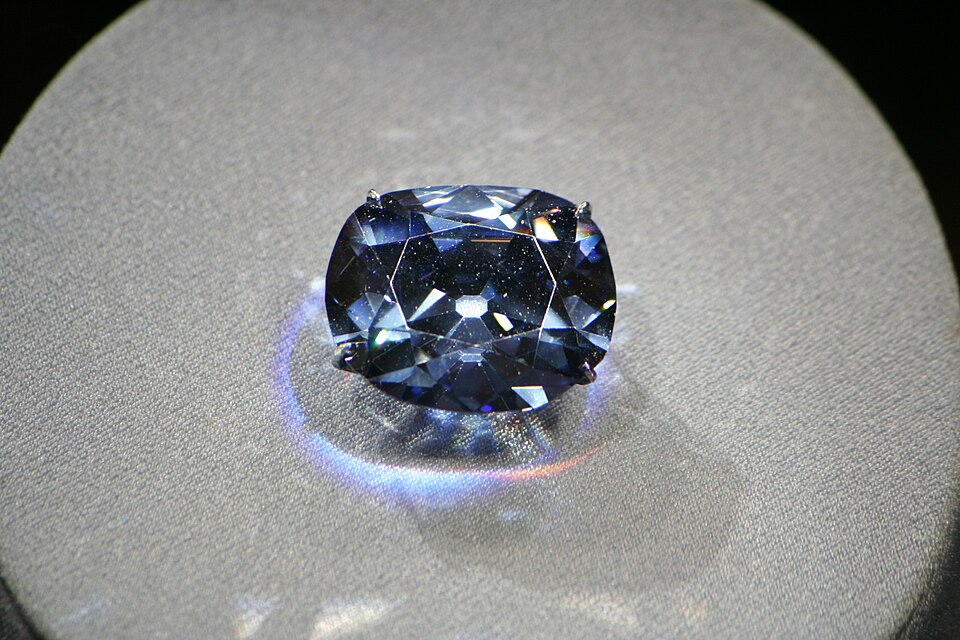
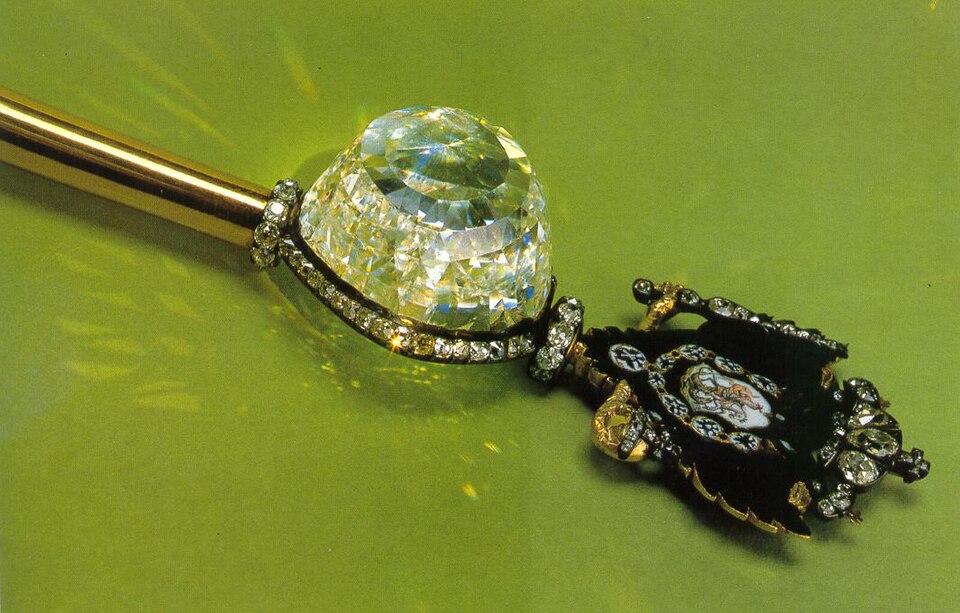
The largest diamond ever found is the Cullinan: 3,106 carats rough, found in South Africa in 1905, cut into nine large stones — Cullinan I (530.2 carats) sits in the Sovereign's Sceptre at the Tower of London. The Hope Diamond (45.52 carats) is a deep blue stone at the Smithsonian in Washington. The Darya-i-Noor ("Sea of Light", about 182 carats) is a pale pink stone in Tehran, and was a sister stone to the Kohinoor in the Mughal treasury. The Orlov (about 190 carats) is in the Imperial Sceptre in the Kremlin, and is widely believed to be the Great Mogul diamond described by Tavernier in 1665. The Regent (140.64 carats) is in the Louvre in Paris. The Kohinoor, at 105.6 carats, is smaller than all of them except the Hope — and more argued over than all of them put together.
The Cullinan: the biggest of all
The Cullinan is the largest gem-quality diamond ever found. It was discovered on 26 January 1905 at the Premier Mine near Pretoria, in South Africa, by the mine's superintendent, Frederick Wells — who is said to have nearly thrown it away, thinking it was a worthless piece of crystal. The rough stone weighed 3,106 carats (3,106.75 by some measurements), roughly the size of a human heart and over half a kilogram in weight. It was named after Sir Thomas Cullinan, the owner of the mine, and it was bought by the Transvaal government and presented to King Edward VII. The cutting was entrusted to Joseph Asscher of Amsterdam, whose workshop spent eight months on the work, with three men working fourteen-hour days. The stone was cut into nine large stones, ninety-seven small brilliants, and some unpolished fragments. Cullinan I, the Great Star of Africa, weighs 530.2 carats and is set in the Sovereign's Sceptre with Cross; Cullinan II, the Second Star of Africa, weighs 317.4 carats and is set in the front of the Imperial State Crown. Both are in the Tower of London, a few cases away from the Kohinoor — and both are more than three times its weight.
The Cullinan's history is the opposite of the Kohinoor's: it is short, well documented, and undisputed. Nobody argues about where it was found, who cut it, or who owns it. It was a product of the modern diamond industry, found by a mining company, cut by a professional workshop, and presented as a gift. The Kohinoor's history is long, disputed, and violent. The comparison is instructive: size alone does not make a diamond famous. The Cullinan is bigger, but the Kohinoor is better known — because its story is a human one, full of emperors, conquerors, and treaties, while the Cullinan's story is a commercial one.
The Hope: the blue diamond with a curse
The Hope Diamond is the most famous coloured diamond in the world: 45.52 carats, a deep steely blue caused by traces of boron in its crystal, graded by the Gemological Institute of America as Fancy Deep grayish blue, VS1. It is believed to have come from the Kollur mines in India, like the Kohinoor, and it was probably cut from a larger stone — the French Blue, or Tavernier Blue — that was bought by King Louis XIV of France in 1668 and lost during the French Revolution. The stone passed through the hands of collectors and bankers, including the Hope family, who gave it its name, and the jeweller Harry Winston, who gave it to the Smithsonian Institution in 1958, where it has been on display ever since.
The Hope has its own curse story, and the Smithsonian is blunt about it: the evidence linking the stone to Tavernier is circumstantial, and the curse is a newspaper invention, built up in the early twentieth century to sell papers. The Hope's owners did suffer — bankruptcy, suicide, murder — but the Smithsonian points out that the stories were assembled after the fact, and that many of them are exaggerated or untrue. The parallel with the Kohinoor is exact: both stones have curse stories, both stories are unproven, and both stories have lasted because they are good stories. The Hope is smaller than the Kohinoor, and it has never been the subject of an international dispute. It is famous for its colour, and for its curse. The Kohinoor is famous for its history.
The Darya-i-Noor and the Orlov: the Mughal sisters
Two of the most interesting comparisons are the stones that shared the Mughal treasury with the Kohinoor. The Darya-i-Noor — Persian for "Sea of Light", the counterpart to the Kohinoor's "Mountain of Light" — is a pale pink diamond of about 182 carats, now in the Treasury of National Jewels in Tehran, part of the Iranian Crown Jewels. It was one of the great stones of the Mughal treasury, and it travelled with the Kohinoor to Persia with Nadir Shah in 1739 — but unlike the Kohinoor, it stayed in Persia, and it is still there. The two stones are sisters: found in the same mines, held by the same emperors, taken by the same conqueror — and then separated, one to London, one to Tehran.
The Orlov is a rose-cut diamond of about 189.6 carats, set in the Imperial Sceptre of Russia, in the Diamond Fund of the Kremlin. It is widely believed to be the Great Mogul diamond described by the French traveller Jean-Baptiste Tavernier in 1665 — a stone of about 280 carats that he saw in the Mughal treasury — but the identification is not certain, and the Gemological Institute of America treats the Orlov's early history as lore. According to legend, the stone was the eye of a Hindu god, stolen from a temple by a French soldier; according to history, it was bought by Count Grigory Orlov, who gave it to Catherine the Great. Like the Kohinoor, the Orlov has a history that is half fact and half legend. Unlike the Kohinoor, nobody is asking for it back.
The Regent and the rest
The Regent is a 140.64-carat diamond found in the Golconda mines in 1698, now in the Louvre in Paris. It was bought by the French Regent, Philippe II, Duke of Orléans, and it has been worn at the coronations of French kings, stolen during the Revolution, recovered, and put on display. The Golden Jubilee, at 545.67 carats, is the largest cut diamond in the world — a brown stone from the Premier Mine in South Africa, now in the Thai Crown Jewels. The Centenary, at 273.85 carats, is the largest flawless colourless diamond. Each of these stones has a story, and each of them is, by the simple measure of size, more impressive than the Kohinoor. And yet none of them is as famous. The Kohinoor's fame does not come from its weight, or its colour, or its cut. It comes from the fact that it has been owned by the people who made history — and that history is still being argued about.
| Diamond | Weight | Where it came from | Where it is now |
|---|---|---|---|
| Cullinan I | 530.2 ct | Premier Mine, South Africa, 1905 (rough 3,106 ct) | Sovereign's Sceptre, Tower of London |
| Cullinan II | 317.4 ct | Same rough as Cullinan I | Imperial State Crown, Tower of London |
| Golden Jubilee | 545.67 ct | Premier Mine, South Africa, 1985 | Thai Crown Jewels (largest cut diamond) |
| Orlov | about 190 ct | Golconda, India; believed to be the Great Mogul | Imperial Sceptre, Kremlin, Moscow |
| Darya-i-Noor | about 182 ct | Golconda, India; Mughal treasury | Treasury of National Jewels, Tehran |
| Regent | 140.64 ct | Golconda, India, found 1698 | Louvre, Paris |
| Kohinoor | 105.6 ct | Golconda / Kollur, India, 1100–1300 | Queen Mother's Crown, Tower of London |
| Hope | 45.52 ct | Kollur, India (probably); French Blue | Smithsonian, Washington |
Sources: Erebaur, “Famous stones & historic jewels” and “Diamond: gemstone facts and properties”; Smithsonian Institution, on the Hope Diamond; Wikipedia, “Koh-i-Noor”, “Cullinan diamond”, “Hope Diamond”, “Darya-i-Noor” and “Orlov (diamond).” Checked 29 November 2026.