The Tower of London: The Recut, Four Crowns, and the Jewel House
The Kohinoor has now spent more than half its known life in a single place: the Tower of London. It arrived in 1850 as a dull, flat-topped stone that disappointed the crowds at the Great Exhibition, and within two years it had been cut down by nearly half its weight and transformed into a sparkling oval brilliant. Since then it has been set in four queens' crowns, worn at three coronations, placed on a coffin, and put on display behind glass, where millions of people file past it every year. The Tower is where the diamond stopped travelling — and where its story became a public one.
In short
After disappointing visitors at the Great Exhibition in 1851, the Kohinoor was recut in 1852 by Garrard of London, using the Amsterdam cutter Levie Benjamin Voorzanger. The recut turned the old Indian-style stone into a modern oval brilliant, reducing its weight from about 186 carats to 105.6 carats. Queen Victoria wore it as a brooch and in a circlet. After her death it was set in the Crown of Queen Alexandra (1902), then the Crown of Queen Mary (1911), then the Crown of Queen Elizabeth the Queen Mother (1937), where it remains today, on display in the Jewel House at the Tower of London.
The recut of 1852
The decision to recut the Kohinoor was controversial even at the time, and it is still argued about today. The stone as it arrived from India was cut in the old Mughal style: a relatively flat top, a deep base, and few facets, which meant that it returned little light and looked dull under European gaslight. Prince Albert, who had a keen interest in science and design, believed the stone could be made far more brilliant by cutting it in the modern style, with many small facets arranged to catch and return the light. The work was entrusted to Garrard, the royal jeweller, and to the Amsterdam diamond cutter Levie Benjamin Voorzanger, who carried out the cutting in London in 1852. The process took weeks, and it was watched by a crowd of dignitaries, including Prince Albert himself and the Duke of Wellington.
The result was a transformation — and a loss. The recut stone was a sparkling oval brilliant, with far more fire than the original, and it was immediately recognised as one of the most beautiful diamonds in the world. But the price was steep: the weight fell from about 186 carats to 105.6 carats, a loss of more than forty per cent. Some of the loss was unavoidable — the old stone was irregular, and the new cut had to remove material to achieve symmetry — but critics have always asked whether it was worth it. The original stone was a piece of history, cut in the style of its time; the new stone was a piece of Victorian jewellery. The fragments cut away were kept, and some were set in smaller pieces of jewellery, but the stone that had travelled from Golconda to Delhi to Lahore was gone, replaced by a smaller, brighter one. This site states the fact plainly: the Kohinoor in the Tower today is not, in shape or weight, the stone that Nadir Shah took from Delhi.
Victoria's brooch
Queen Victoria wore the recut diamond as a brooch and set in a circlet, and she wore it often — it appears in portraits and photographs of her later years, pinned to her black dresses. She was fond of the stone, and she was also aware of its history: she knew it had been surrendered by a child maharaja, and she knew that Duleep Singh, who lived in England, had asked for it back. She refused. The diamond stayed with the Crown, and when she died in 1901, after sixty-three years on the throne, it passed with the Crown Jewels to her son Edward VII. By then the stone had been in Britain for half a century, and it was already one of the most famous objects in the country.
Four queens' crowns
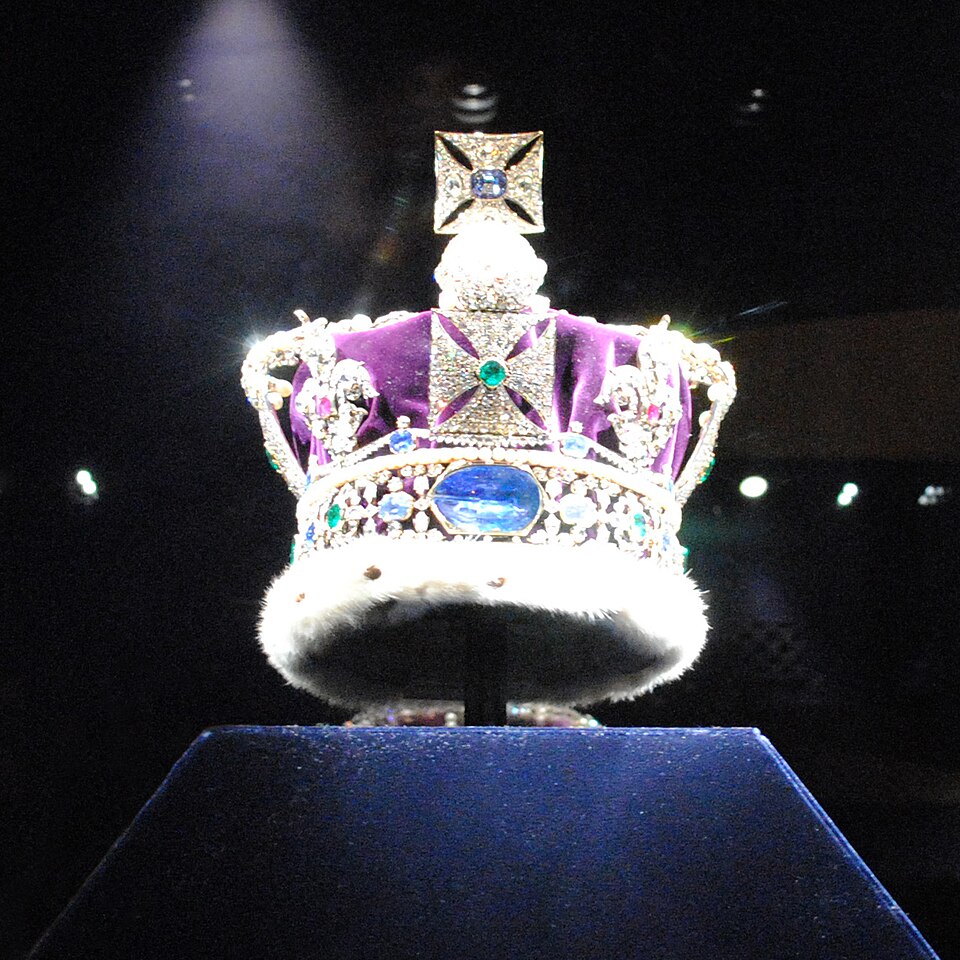
After Victoria, the Kohinoor was set in three more crowns in succession, one for each queen consort. In 1902 it was set in the Crown of Queen Alexandra, the wife of Edward VII, for their coronation. In 1911 it was transferred to the Crown of Queen Mary, the wife of George V, for their coronation. And in 1937 it was set in the Crown of Queen Elizabeth the Queen Mother, the wife of George VI — the crown it sits in today. The 1937 crown was made of platinum, the first British crown to use the metal, and it carries about 2,800 other diamonds around the Kohinoor, which is set in the front in a detachable mount. Each transfer was a small ceremony of its own: the stone was removed from one crown, reset in another, and the old crown was put on display with a crystal replica in its place.
The Queen Mother's crown has had the longest life of the four. It was worn at the coronation of George VI in 1937, and it was placed on the Queen Mother's coffin when she died in 2002, at the age of 101, resting on top of the coffin as it lay in state at Westminster Hall and was carried to her funeral at Westminster Abbey. Since then the crown has stayed on display in the Jewel House, and the question of whether it would ever be worn again was answered at the coronation of Charles III in 2023: Queen Camilla wore the Crown of Queen Mary instead, reset with other stones — a decision widely understood as a gesture to avoid controversy over the Kohinoor. The stone's days as a worn jewel may be over; its life as a museum object has begun.
The Jewel House
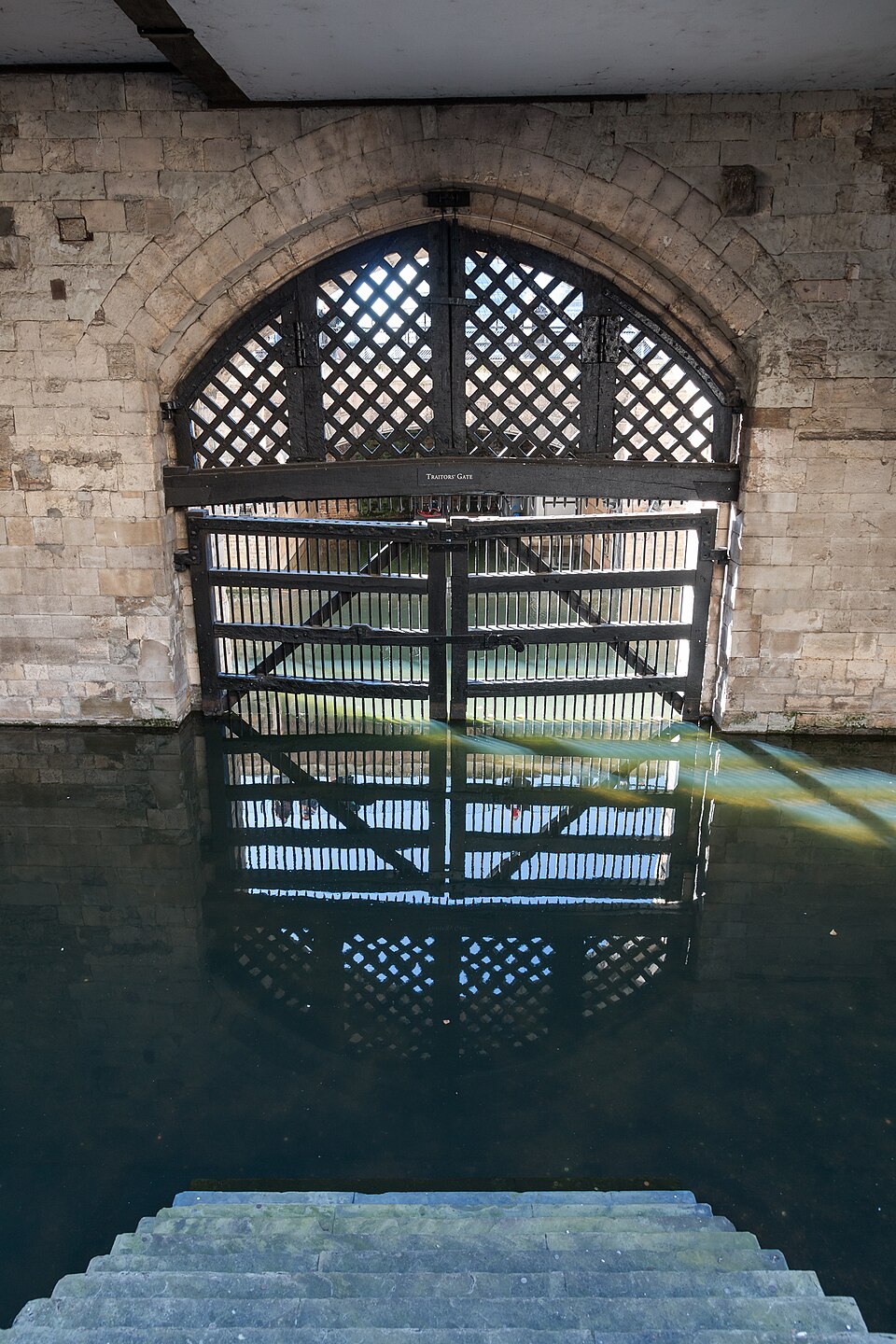
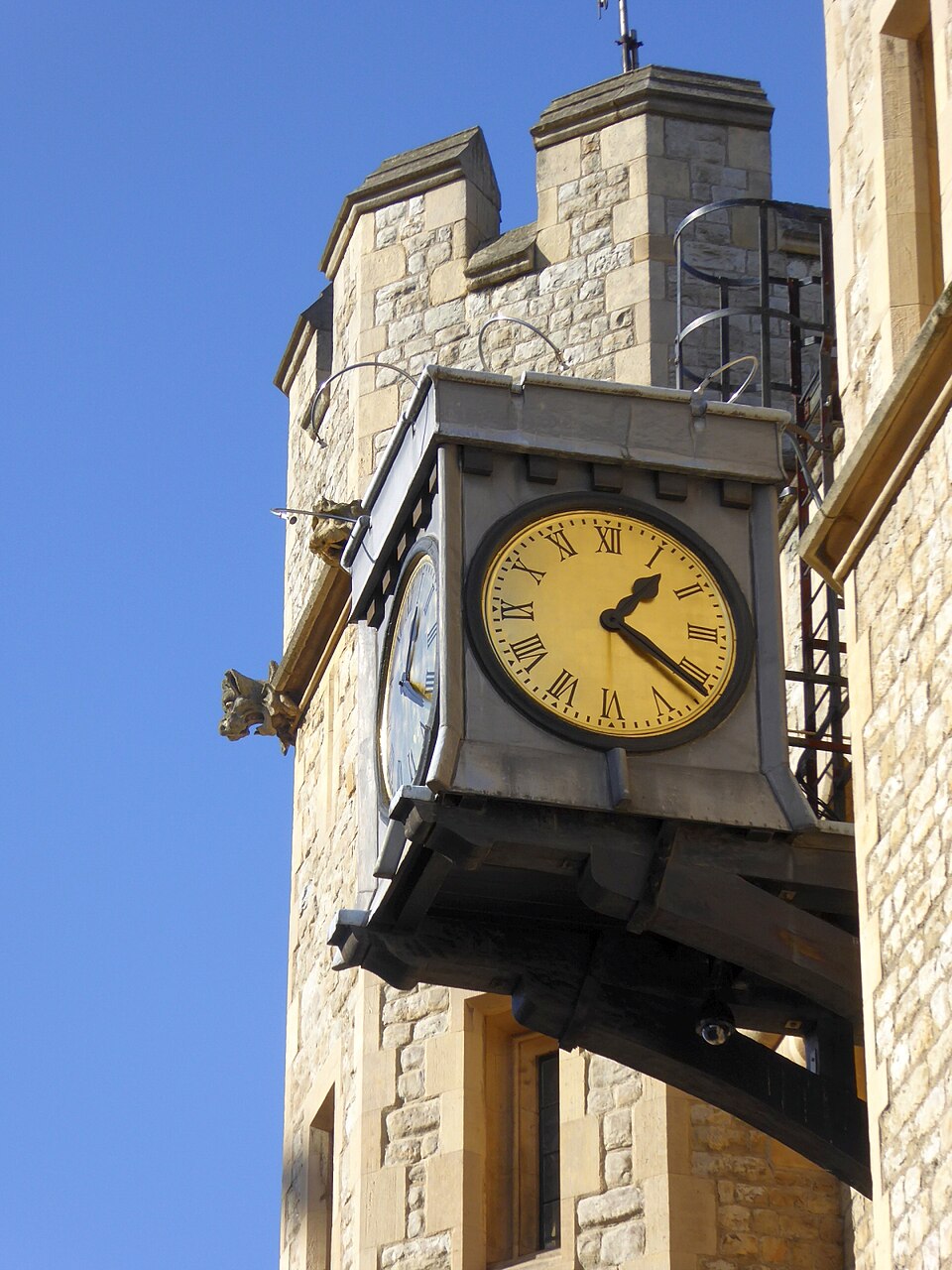
The Crown Jewels are kept in the Jewel House, in the Waterloo Block at the Tower of London, and they are among the most visited objects in Britain. Visitors file past on a moving walkway, looking at the crowns, sceptres, orbs, and ceremonial plate through thick glass, with the Kohinoor's crown among the highlights of the display. The Tower itself is a thousand years old — a fortress, a palace, a prison, and a museum — and the Crown Jewels have been kept there, with interruptions, since the fourteenth century. The Kohinoor is the most famous single object in the collection, and also the most argued about: every visitor who reads the label is reading about a stone that four countries claim, and the Tower's displays have, in recent years, begun to say more about how the stone arrived in Britain than they used to.
| Date | What happened |
|---|---|
| 1851 | Displayed at the Great Exhibition; disappoints under gaslight |
| 1852 | Recut by Garrard / Voorzanger: about 186 carats to 105.6 carats, oval brilliant |
| 1852–1901 | Worn by Queen Victoria as a brooch and in a circlet |
| 1902 | Set in the Crown of Queen Alexandra for Edward VII's coronation |
| 1911 | Transferred to the Crown of Queen Mary for George V's coronation |
| 1937 | Set in the Crown of Queen Elizabeth the Queen Mother (platinum, about 2,800 diamonds) |
| 9 Apr 2002 | The Queen Mother's crown rests on her coffin at her funeral |
| 2023 | Queen Camilla wears Queen Mary's crown instead at Charles III's coronation |
Sources: Wikipedia, “Koh-i-Noor”; World History Encyclopedia, “Koh-i-Noor”; Firstpost, “Camilla to wear Kohinoor crown as Queen”; Encyclopaedia Britannica, “Koh-i-noor diamond.” Checked 29 November 2026.