Origins and Early History: A Diamond from the Mines of Golconda
Every famous object has an origin story, and the Kohinoor's is the weakest part of its history. We know where it is now, and we know, more or less, how it travelled from Delhi to London. But the first five hundred years of its life are a fog: a handful of competing stories, none of them provable, about mines, kings, and temples in southern India. This guide explains what historians think they know, what they only guess, and why the gap matters — because the question of where the diamond came from is tangled up with the question of who it belongs to.
In short
The Kohinoor was most likely found in the diamond mines of southern India — the Golconda region, and probably the Kollur workings on the Krishna River in what is now Andhra Pradesh — sometime between 1100 and 1300. Before the 1700s, India was the world's only important source of large diamonds, and the Krishna gravels produced the Kohinoor, the Hope, the Regent, the Darya-i-Noor, and the Orlov. The first firm written reference to the stone is in the memoirs of Babur, the founder of the Mughal Empire, in 1526. Everything before that is reconstruction: plausible, but not proven.
The only source of diamonds in the world
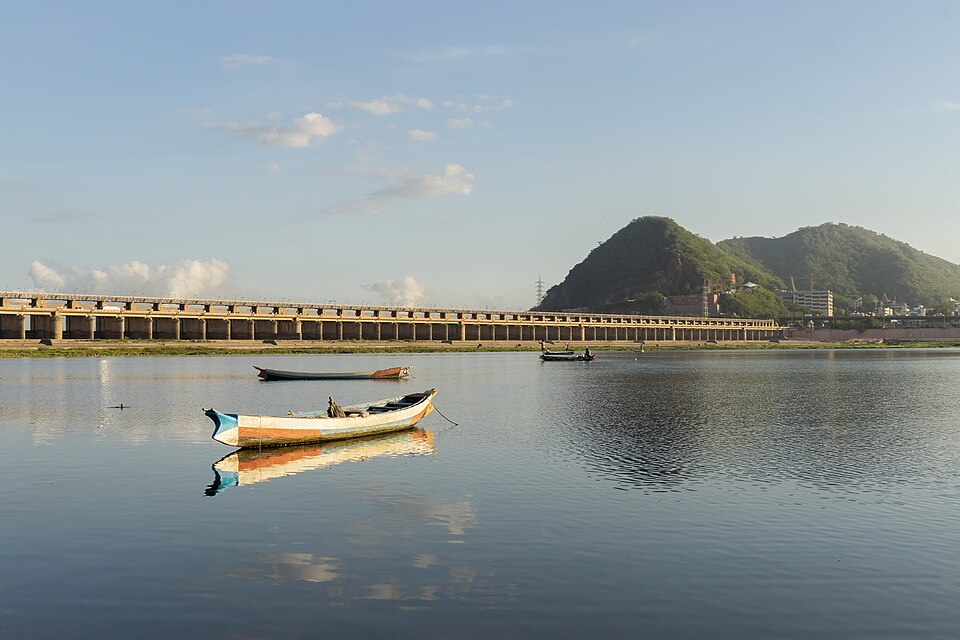
For most of human history, if you wanted a large diamond, there was only one place to find it: India. Diamonds were first found in the river gravels of the Deccan plateau, in the south of the subcontinent, and for more than two thousand years India was the world's only supplier. The stones were washed out of the gravels of rivers like the Krishna and the Godavari by gangs of workers, who sifted the earth by hand and looked for the glint of a crystal among the pebbles. The work was licensed by local rulers, who took a share of everything found, and the largest stones went straight into royal treasuries. Brazil did not produce diamonds until the 1720s, and South Africa not until the 1860s. Before that, every great diamond in Europe, Persia, or the Mughal court had come from the same small patch of river country in southern India.
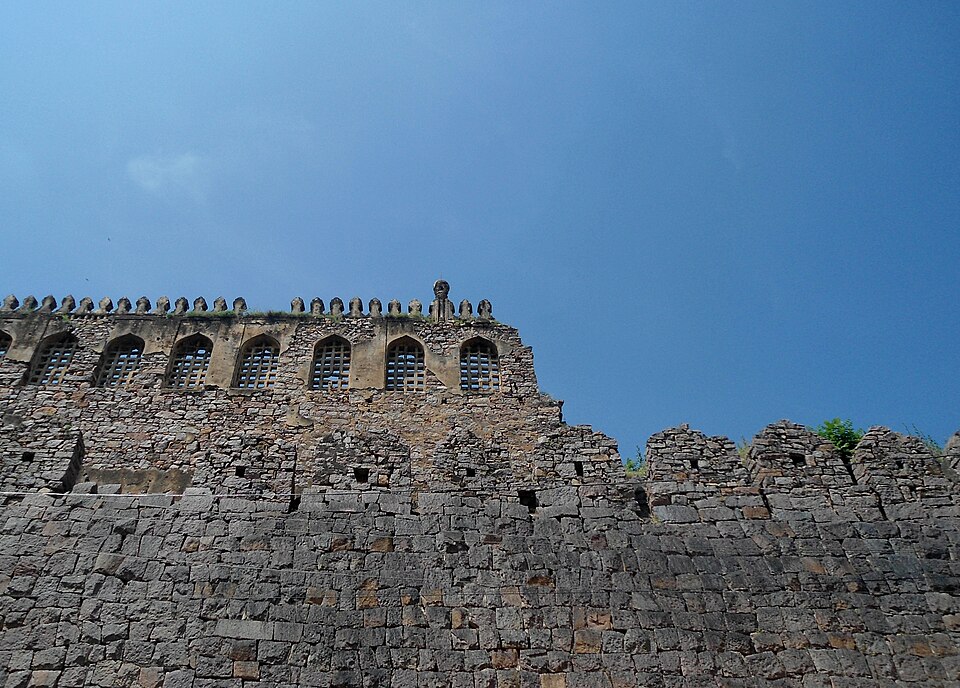
The most famous of the Indian workings were at Kollur, on the Krishna River, and in the wider Golconda region around the fortress city of Golconda, near modern Hyderabad. "Golconda" became a byword for fabulous wealth in Europe — the word is still used in English to mean a source of great riches — because the mines there produced stones of a size and quality found nowhere else. The Kohinoor, the Hope, the Regent, the Darya-i-Noor, and the Orlov all came out of this river country. The Kohinoor was probably found there too, most likely between 1100 and 1300, although the date is an estimate, not a record. Nobody wrote down the day a nameless worker pulled the stone out of the gravel.
Three competing stories
Historians offer three main accounts of how the stone reached the Mughal emperors, and they cannot all be right. The first says it was taken from the Raja of Malwa by Sultan Alauddin Khalji of Delhi in 1304, after a campaign in central India, and then passed down through the rulers of the Delhi Sultanate. The second says it was carried north from Warangal, the capital of the Kakatiya kingdom, when Alauddin's general Malik Kafur sacked the city in 1310 and stripped its treasury — a story told by the later chronicler Khafi Khan. The third says the stone was not found until much later, in the Kollur mines around 1650, and was presented to the Mughal emperor Shah Jahan in 1656. Each story has supporters, and each has problems. The Warangal story depends on a chronicle written centuries later. The 1650 story would mean the stone was not the one Babur wrote about in 1526. The honest answer is that we do not know which is right, and this site does not pretend otherwise.
What is certain is that by 1526 the stone was in the hands of the Mughal emperors. Babur, the founder of the dynasty, mentions a great diamond in his memoirs, the Baburnama, written in 1526 — the year he defeated Ibrahim Lodi at the First Battle of Panipat and founded the Mughal Empire. Babur says the diamond was given to his son Humayun by the Raja of Gwalior after the battle, or that it came from the defeated Lodi treasury; the two accounts differ, and Babur does not call the stone by its present name. Most historians think "Babur's diamond" was the stone that later became the Kohinoor, but some argue he was describing a different stone, and the question is still open. What matters is that from 1526 onwards the diamond has a documented history, and it is a history of emperors.
The legends of the beginning
Around the gap in the record, legends have grown. One says the diamond is the Syamantaka, a jewel mentioned in ancient Sanskrit texts, and that it is more than five thousand years old. Another says it was the eye of a Hindu goddess in a temple in southern India, stolen by a thief. Another says it was found by a shepherd, or a farmer, or a child playing in the river. None of these stories can be verified, and historians treat them as folklore — interesting, but not evidence. The same is true of the claim, sometimes repeated, that the stone appears in Mesopotamian texts from 3200 BCE. There is no reliable evidence for it, and the claim is best understood as part of the mythology that has always surrounded the stone: because it is famous, people want it to be ancient, and because it is ancient, people want it to be mentioned in every old book.
The temptation to attach the Kohinoor to every large diamond in every old text is understandable, and it is also the reason the early history is so hard to untangle. Southern India produced many large diamonds over many centuries, and old texts mention many of them by name, by weight, or by owner. Matching a name in a chronicle to a physical stone in a crown is guesswork unless the chain of ownership is documented, and for the Kohinoor the chain only becomes solid in the sixteenth century. The responsible thing is to say so, and to treat the earlier stories as what they are: possibilities, not facts.
Why the origin matters
The question of where the Kohinoor came from is not only a matter of curiosity. It matters because the ownership dispute turns, in part, on history: India argues that the stone is Indian, taken during colonial rule; Pakistan argues that it was taken from Lahore, the capital of the Sikh Empire; Afghanistan argues that it spent seventy years under the Durrani rulers; Iran argues that Nadir Shah carried it to Persia. Each claim reaches back into the fog of the early history and picks the thread that suits it. A clear-eyed account has to admit that the origin is uncertain, and that the uncertainty cuts both ways: it weakens every claim that depends on a single tidy story, and it strengthens the case for treating the diamond as a shared piece of history rather than the property of one modern state.
What can be said with confidence is this: the stone is Indian in origin, in the sense that it was found in the mines of southern India, most likely at Kollur on the Krishna River, between 1100 and 1300. It then passed, by conquest and by gift, through the treasuries of the Delhi Sultanate and into the hands of the Mughals, where its documented history begins. Everything before Babur is a matter of weighing stories, and the guides that follow will say so wherever the evidence runs out.
| Date | What the sources say | How certain is it? |
|---|---|---|
| 1100–1300 | Probably found in the Golconda / Kollur mines, Krishna River | Likely — the standard view, but not documented |
| 1304 | Alauddin Khalji takes a great diamond from the Raja of Malwa | Possible — one of several competing accounts |
| 1310 | Malik Kafur sacks Warangal; the Kakatiya treasury is stripped | Possible — based on a later chronicle |
| 1526 | Babur mentions a great diamond in the Baburnama | Firm — the first written reference |
| c. 1650 | Alternative account: found at Kollur, given to Shah Jahan in 1656 | Possible — conflicts with the 1526 reference |
Sources: Encyclopaedia Britannica, “Koh-i-noor diamond”; World History Encyclopedia, “Koh-i-Noor” and “Timeline: Koh-i-Noor”; Wikipedia, “Koh-i-Noor”; The Hindu, “Secret lives of Indian jewels.” Checked 29 November 2026.